When importing a product, one of the very first and most important steps is to identify its HS Code (Harmonized System Code). This code is not simply a classification number—it plays a critical role in determining whether the product can be imported, what regulatory requirements apply, the applicable duty rates, and even whether additional obligations such as recycling fees are imposed.
For this reason, it is essential to confirm the HS Code of the product with the seller before proceeding with any purchase or shipment.
Structure of the HS Code
The HS Code is based on an internationally standardized system:
- The first 6 digits are universal and governed by the World Customs Organization (WCO)
- The remaining digits (typically up to 10 in total) are country-specific and used for further classification
In other words, the first 6 digits remain consistent across countries, while the additional 4 digits may vary depending on each country’s classification system.
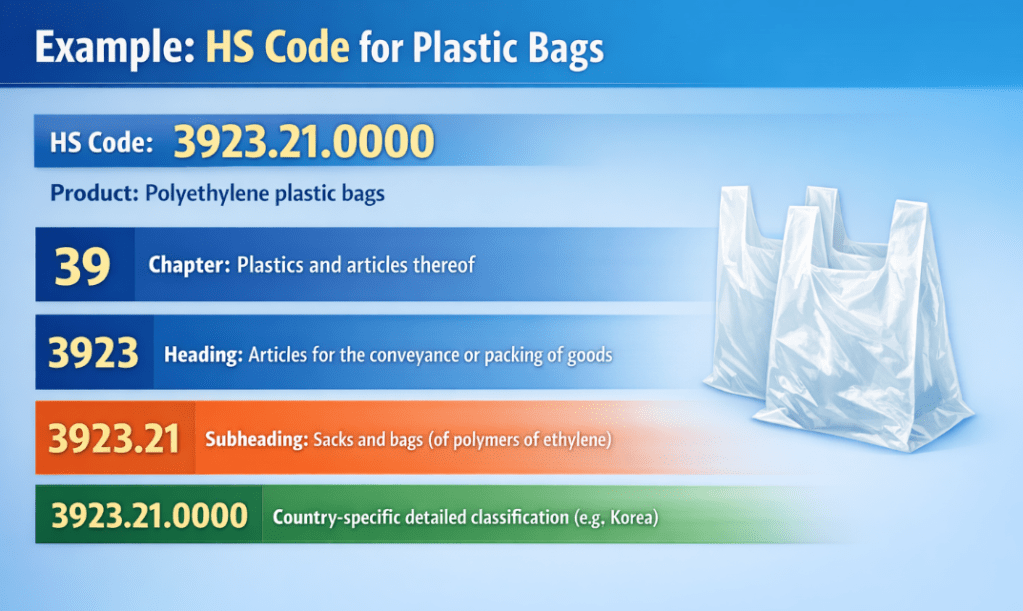
Why the HS Code is Critical
The HS Code determines several key aspects of international trade, including:
- Import eligibility (whether the product is restricted or prohibited)
- Applicable customs duties and VAT
- Required certifications or permits
- Trade regulations such as anti-dumping or strategic controls
- Environmental obligations such as recycling or EPR fees
Using an incorrect HS Code can lead to additional duties, customs delays, or compliance issues, so accurate classification is essential.
What If There Is a Dispute Over the HS Code?
It is quite common for exporters and importers to have different interpretations of the correct HS Code. In such cases, the following approaches are generally recommended:
- Apply for an advance ruling from the customs authority
- Refer to international classification guidelines such as HS Explanatory Notes
- Consult customs brokers or logistics professionals
In Korea, an advance ruling issued by customs authorities is legally binding and can significantly reduce risk.
HS Code Differences Between Exporter and Importer
In real trade practice, it is not unusual for the exporter and importer to use different HS Codes for the same product.
For example, an exporter in China may use HS Code “A,” which appears on the Certificate of Origin (COO), while the importer may classify the same product under HS Code “B” based on the importing country’s interpretation—even when the first 6 digits differ.
In such cases, the importer is not necessarily required to follow the exporter’s HS Code. Instead, the importer is responsible for declaring the HS Code in accordance with the importing country’s classification rules.
Key Consideration: FTA Eligibility
Whether FTA tariff benefits can still be applied depends on the specific Free Trade Agreement and how strictly it links HS classification to origin verification.
China–Korea FTA
Under the Korea–China FTA, customs authorities generally place greater emphasis on whether the product meets the applicable Rules of Origin (ROO), rather than requiring perfect alignment of HS codes between documents.
This means that even if the HS Code on the COO differs from the one declared during import, FTA benefits may still be granted, provided that:
- The classification difference is technically justified
- The product satisfies the origin criteria (e.g., RVC or CTC rules)
Other FTAs (e.g., U.S.-related agreements)
In contrast, some FTAs—particularly those involving the United States—tend to apply stricter verification standards.
In these cases:
- HS classification is closely tied to the Rules of Origin
- Consistency between the COO and import declaration becomes more important
If there is a mismatch in HS codes, customs authorities may question the validity of the origin claim, which can result in denial of preferential tariff treatment unless the discrepancy is clearly explained and justified.
Why Does This Difference Exist?
The difference does not come from the countries themselves, but from how each FTA is structured.
- Some FTAs rely heavily on HS classification when defining origin rules
- Others allow more flexibility based on product characteristics and supporting documentation
Additionally, verification approaches differ:
- Some agreements adopt a more practical, trade-facilitating approach
- Others emphasize strict documentation consistency and risk control
In Short…
- The HS Code is the starting point of any import transaction
- The first 6 digits are globally standardized, while additional digits vary by country
- Import duties, regulations, and compliance requirements all depend on the HS Code
- Importers are not strictly bound by the exporter’s HS Code, but any differences must be well justified
- FTA eligibility may be affected depending on the agreement and how discrepancies are handled
.
 Real insights from the world of global trade